LIVE
Nasdaq Plunges 5.5% as AI Stocks Sell Off After US Midterms  •  Spain Identifies 66 of 69 Victims of the Urda Train Crash, Including Four Americans  •  Israel Stuck in Election Deadlock as Bennett Backs Eisenkot — and No Bloc Reaches 61 Seats
World

Thousands March in Delhi Demanding the Election Chief's Resignation — the Biggest Challenge to Modi Since 2014

Trending Now • 2 November 2026 • 4 min read

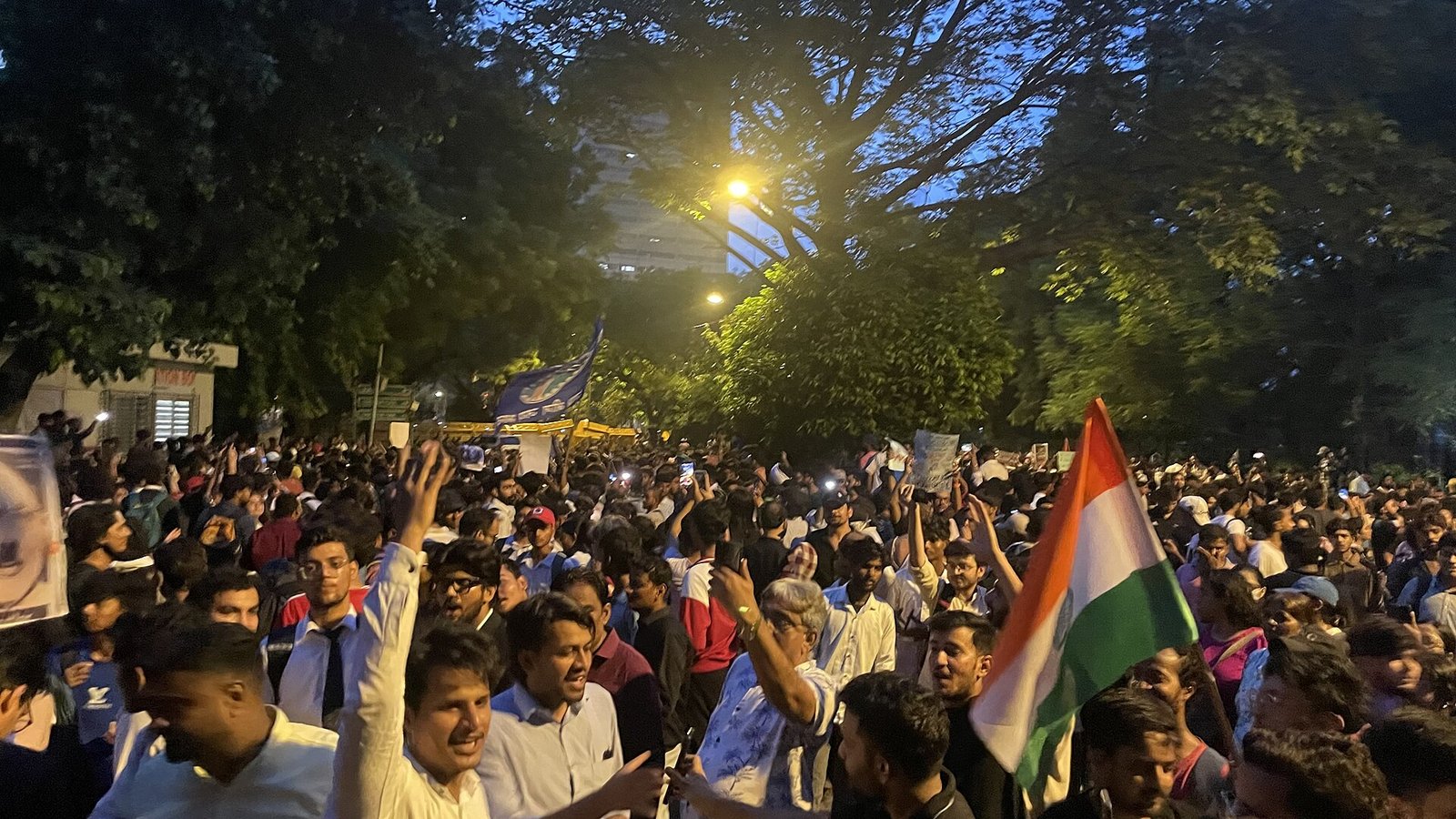
large evening protest crowd with the Indian tricolour, placards and raised hands at Jantar Mantar, New Delhi

Photo: Alnitak-Alnilam-Mintaka, CC BY-SA 4.0, via Wikimedia Commons.

TL;DR — the direct answer: Thousands of people marched in Delhi on Sunday 1 November 2026 demanding the resignation of India's Chief Election Commissioner, Gyanesh Kumar, over a revision of voter registers. Led by Congress leader Rahul Gandhi, protesters allege the exercise favours Prime Minister Narendra Modi's Bharatiya Janata Party (BJP). Authorities tightened security and announced traffic diversions ahead of the march from central Delhi to Ramlila Maidan, where thousands had gathered.

What happened: Sunday's demonstration is the latest in a series of near-daily protests organised since late September by opposition parties, student organisations and the youth-led Cockroach Janta Party, all demanding the election chief's resignation. The trigger, according to reporting of the protests, was a report in the Indian Express that two deputies of Chief Election Commissioner Gyanesh Kumar had raised concerns internally about voter register revisions, registration procedures and digital systems. Protesters say the revision process risks removing legitimate voters or tilting the rolls; the government has not accepted that characterisation, and the march itself is a protest demand, not a court verdict on the revision.

Why it is trending: The scale and persistence of the protests are the story. Reuters-linked reporting describes the demonstrations and growing opposition support as the biggest challenge to Modi since he came to power in 2014, even though his government remains stable and the next general election is not due until 2029. That framing matters: this is not an election-week protest, but a sustained campaign about the machinery of elections themselves — who is on the voter list, who decides, and who checks the process. When the referee becomes the issue, the argument stops being about one party's policies and becomes about trust in the vote itself.

Background / context: India's voter-register revision, known in shorthand as SIR in related coverage, has been contested in several states, with opposition parties arguing that large-scale deletions and verification demands burden genuine voters. Election authorities have maintained that revisions are routine clean-up exercises to remove duplicates, deaths and shifted voters. The Delhi march brought that state-by-state argument to the capital in a single, visible demonstration, with security and traffic planning signalling that authorities expected a large turnout. The presence of student organisations alongside established opposition parties also points to a younger, more street-level energy behind the campaign than a standard party rally.

What we know / what is unconfirmed: Confirmed: the march took place in Delhi on Sunday, it was led in part by Rahul Gandhi, thousands gathered at Ramlila Maidan, security and diversions were put in place, and protests on this demand have run near-daily since late September. Reported, not independently verified here: the internal concerns attributed to the election chief's deputies, as reported by the Indian Express. Unconfirmed: the protesters' central allegation that the revision favours the BJP — that is an allegation, not an established finding — and any claim about how many voters, if any, have been wrongly affected. Readers should treat turnout descriptions such as “thousands” as the scale reported, not a precise headcount.

What happens next: The key question is whether the campaign forces a formal response — a public clarification from the Election Commission, a court hearing, or a political negotiation — or whether it continues as street pressure without an institutional answer. With the next general election three years away, the protest movement's test is endurance: can near-daily demonstrations sustain attention, or will they fade once the news cycle moves on? Either way, the demand itself is now unmistakable: the opposition wants the election chief out.

Advertisement

Frequently asked questions

Q: Who are the Delhi protesters demanding to resign?
A: Chief Election Commissioner Gyanesh Kumar, over voter-register revisions.

Q: Who led the march?
A: Congress leader Rahul Gandhi was among the leaders, with opposition parties, student groups and the Cockroach Janta Party involved.

Q: When is India's next general election?
A: Not due until 2029; the current protests are about the voter-roll process, not an imminent national vote.

Sources: ChannelOne News / Reuters — Delhi protest

← Back home